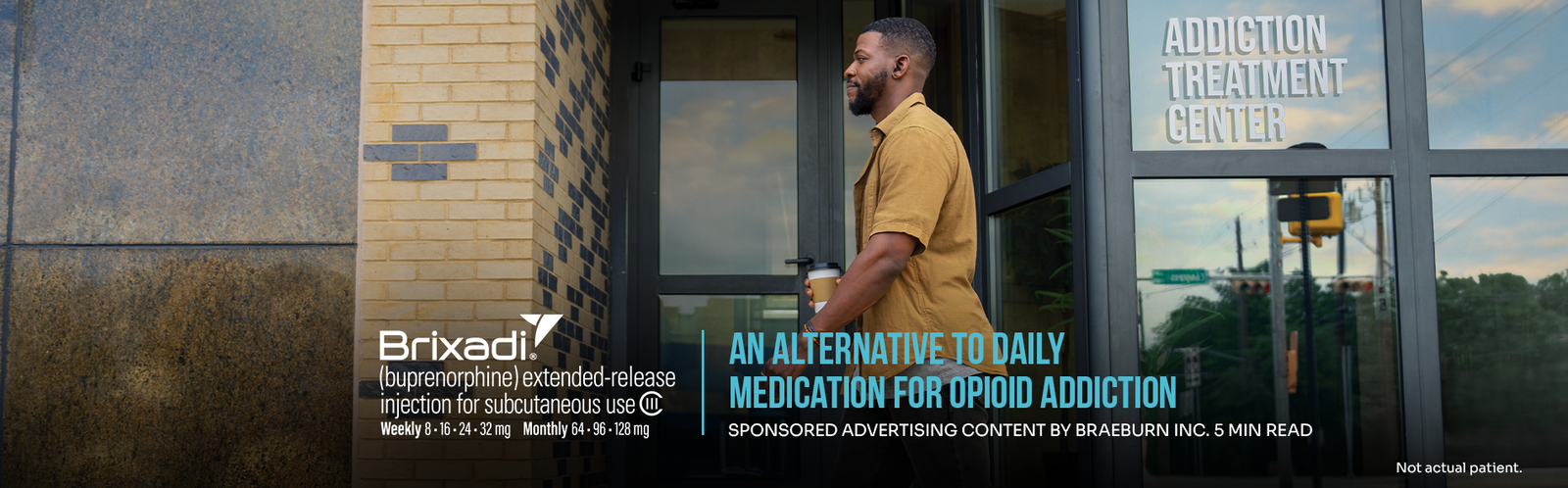
An Alternative to Daily Medication for Opioid Addiction
When it comes to opioid addiction, everyone’s recovery journey looks different - what works for one person may not work for someone else. Some people may start their recovery journey with daily medication, but could face obstacles. Can you relate to any of these?
- Remembering or choosing to take doses
- Feeling dependent on a substance
- Taking it as directed
- Theft or loss
- Secure storage/safe disposal
- Concerns about dental issues
The Importance of Medicine as Part of Your Recovery Journey
If you’ve experienced any of these challenges, you’re not alone. According to 1 study, about 30% to 60% of people taking a daily medicine for opioid addiction stopped taking them within 30 days. Unfortunately for some, the shorter amount of time they’re on treatment, the more likely they are to return to opioid use. However, it’s been proven that the combination of medicine and counseling may increase your chances of achieving your recovery goals. So, even if you find yourself facing challenges with your daily medication, it’s important to keep the bigger picture in mind, talk with your doctor, and continue treatment.
Learn About Your Options
Recovery from opioid addiction is a journey, and it’s never easy. But medicine, counseling, and community support may help. When it comes to treatment for opioid addiction, you have options besides daily medications. You may have heard of a medication called buprenorphine. Buprenorphine is a medicine that, when used along with counseling, can help treat the symptoms associated with opioid dependence or addiction. Did you know that buprenorphine is available in a different form besides daily tablets or films?
BRIXADI is a long-acting injectable form of buprenorphine medicine given by a healthcare provider once monthly or once weekly to help lower opioid use in people with moderate to severe opioid addiction. BRIXADI should be used as a part of a complete treatment plan that also includes counseling and behavioral therapy. BRIXADI delivers a continuous, steady release of buprenorphine without daily ups and downs. This means that, with BRIXADI, you don’t need to take a daily form of buprenorphine for opioid addiction.
BRIXADI® (buprenorphine) extended-release injection for subcutaneous use is only given by a healthcare provider because of the serious risk of potential harm or death from self-injecting into a vein (intravenously).
Finding a Treatment That Works for Your Recovery Journey
We’ve talked about the options available to treat opioid addiction. It’s important to remember that, although treating opioid addiction is possible, your recovery journey starts with seeking help.
If you would like to learn more about treatment with BRIXADI, click here to visit the website.
WHAT IS BRIXADI?
BRIXADI is a prescription medicine used to treat moderate to severe opioid addiction (dependence) to opioid drugs (prescription or illegal) in people who have started treatment with a single dose of a buprenorphine medicine in the form of a sublingual tablet or buccal film (transmucosal), or who are already being treated with buprenorphine. BRIXADI should be used as part of a complete treatment plan that also includes counseling and behavioral therapy.
IMPORTANT SAFETY INFORMATION
What is the most important information I should know about BRIXADI?
- Because of the serious risk of potential harm or death from self-injecting BRIXADI into a vein (intravenously), it is only available through a restricted program called the BRIXADI Risk Evaluation and Mitigation Strategy (REMS) Program.
- BRIXADI is not available in retail pharmacies.
- Your BRIXADI injection will only be given to you by a healthcare provider.
- BRIXADI (buprenorphine) extended-release injection for subcutaneous use contains a medicine called buprenorphine. Buprenorphine is an opioid that can cause serious and life-threatening breathing problems, especially if you take or use certain other medicines or drugs.
- Ask your healthcare provider about medicines like naloxone or nalmefene that can be used in an emergency to reverse opioid overdose. If a medication is given to reverse opioid overdose, you must call 911 or get emergency medical help right away to treat an overdose or accidental use of an opioid.
- BRIXADI can cause serious and life-threatening breathing problems. Get emergency help right away if you:
- feel faint
- have blurred vision
- feel dizzy
- have slurred speech
- are confused
- are breathing slower than normal
- feel sleepy or uncoordinated
- cannot think well or clearly
- Do not take BRIXADI with certain medicines. Taking BRIXADI with other opioid medicines, benzodiazepines, gabapentinoids (gabapentin or pregabalin), alcohol, other central nervous system depressants (including street drugs) can cause severe drowsiness, decreased awareness, breathing problems, coma, and death.
- In an emergency, have family members tell the emergency department staff that you are physically dependent on an opioid and are being treated with BRIXADI.
- You may have detectable levels of BRIXADI in your body for several months after stopping treatment with BRIXADI.
Do not receive BRIXADI if you are allergic to buprenorphine or any ingredients in BRIXADI:
- BRIXADI weekly: anhydrous ethanol, soybean phosphatidylcholine, glycerol dioleate
- BRIXADI monthly: N-methylpyrrolidone, soybean phosphatidylcholine, glycerol dioleate
Before receiving BRIXADI, tell your healthcare provider about all of your medical conditions, including if you have:
- Trouble breathing or lung problems
- A curve in your spine that affects your breathing
- Addison’s disease
- An enlarged prostate (men)
- Problems urinating
- Liver, kidney, or gallbladder problems
- A history of alcoholism
- A head injury or brain problem
- Mental health problems
- Adrenal gland or thyroid gland problems
- A latex allergy. The BRIXADI needle cap contains latex.
Tell your healthcare provider if you are:
- pregnant or plan to become pregnant. If you receive BRIXADI while pregnant, your baby may have symptoms of opioid withdrawal at birth that could be life-threatening if not recognized and treated. Talk to your healthcare provider if you are pregnant or become pregnant.
- breastfeeding. BRIXADI can pass into your breast milk and may harm your baby. Talk to your healthcare provider about the best way to feed your baby during treatment with BRIXADI. Monitor your baby for increased drowsiness and breathing problems if you breastfeed during treatment with BRIXADI.
Tell your healthcare provider about all the medicines you take, including prescription and over-the-counter medicines, vitamins and herbal supplements. Talk with your healthcare provider before starting any new medicines during or after stopping treatment with BRIXADI.
What should I avoid while receiving BRIXADI?
- Do not drive, operate heavy machinery or perform any other dangerous activities until you know how BRIXADI affects you. BRIXADI can cause drowsiness and slow reaction times. BRIXADI can make you sleepy, dizzy, or lightheaded. This may happen more often in the first few days after your injection and when your dose is being changed.
- You should not drink alcohol or use prescription or over-the-counter medicines that contain alcohol during treatment with BRIXADI, because this can lead to loss of consciousness or even death.
What are the possible side effects of BRIXADI?
BRIXADI can cause serious side effects, including:
- Trouble breathing. Taking BRIXADI with other opioid medicines, benzodiazepines, gabapentinoids (gabapentin or pregabalin), alcohol, or other central nervous system depressants (including street drugs) can cause breathing problems that can lead to coma and death.
- Sleepiness, dizziness, and problems with coordination.
- Physical dependence or abuse.
- Liver problems. Call your healthcare provider right away if you notice any of these symptoms:
- your skin or the white part of your eyes turns yellow (jaundice)
- dark or “tea-colored” urine
- light-colored stools (bowel movements)
- loss of appetite
- pain, aching, or tenderness on the right side of your stomach area
- nausea
Your healthcare provider should do tests to check your liver before and during treatment with BRIXADI.
- Allergic reaction. You may have a rash, hives, swelling of your face, wheezing, light-headedness when changing positions, feeling faint, or loss of consciousness. Call your healthcare provider or get emergency help right away.
- Opioid withdrawal. Call your healthcare provider right away if you get any of these symptoms:
- shaking
- goose bumps
- sweating more than normal
- diarrhea
- feeling hot or cold more than normal
- vomiting
- runny nose
- muscle aches
- watery eyes
These symptoms may start weeks to months after your last dose of BRIXADI. Tell your healthcare provider if you develop any of these symptoms.
- Decrease in blood pressure. You may feel dizzy if you get up too fast from sitting or lying down.
- The most common side effects of BRIXADI include: injection site pain, headache, constipation, nausea, injection site redness, injection site itching, trouble sleeping (insomnia), and urinary tract infection.
BRIXADI may affect fertility in males and females. Talk to your healthcare provider if this is a concern for you.
These are not all of the possible side effects of BRIXADI. Call your healthcare provider for medical advice about side effects.
You are encouraged to report negative side effects of prescription drugs to the FDA. Visit www.fda.gov/medwatch or call 1-800-FDA-1088.
For more information about BRIXADI, ask your healthcare provider or go to www.BRIXADI.com or call 1-833-274-9234.
This information does not take the place of talking with your healthcare provider for medical advice about your condition or treatment.
Please see the BRIXADI Medication Guide and Full Prescribing Information, including BOXED WARNING, at BRIXADI.com.
All registered trademarks are the property of their respective owners.
© 2026 Braeburn Inc. All rights reserved.
Plymouth Meeting, PA 19462
BRX-1685/February 2026
www.braeburnrx.com